s谩bado, 15 de diciembre de 2018

Circulatory system 馃構馃構馃構馃構馃ぃ馃ぃ

Interesting data:
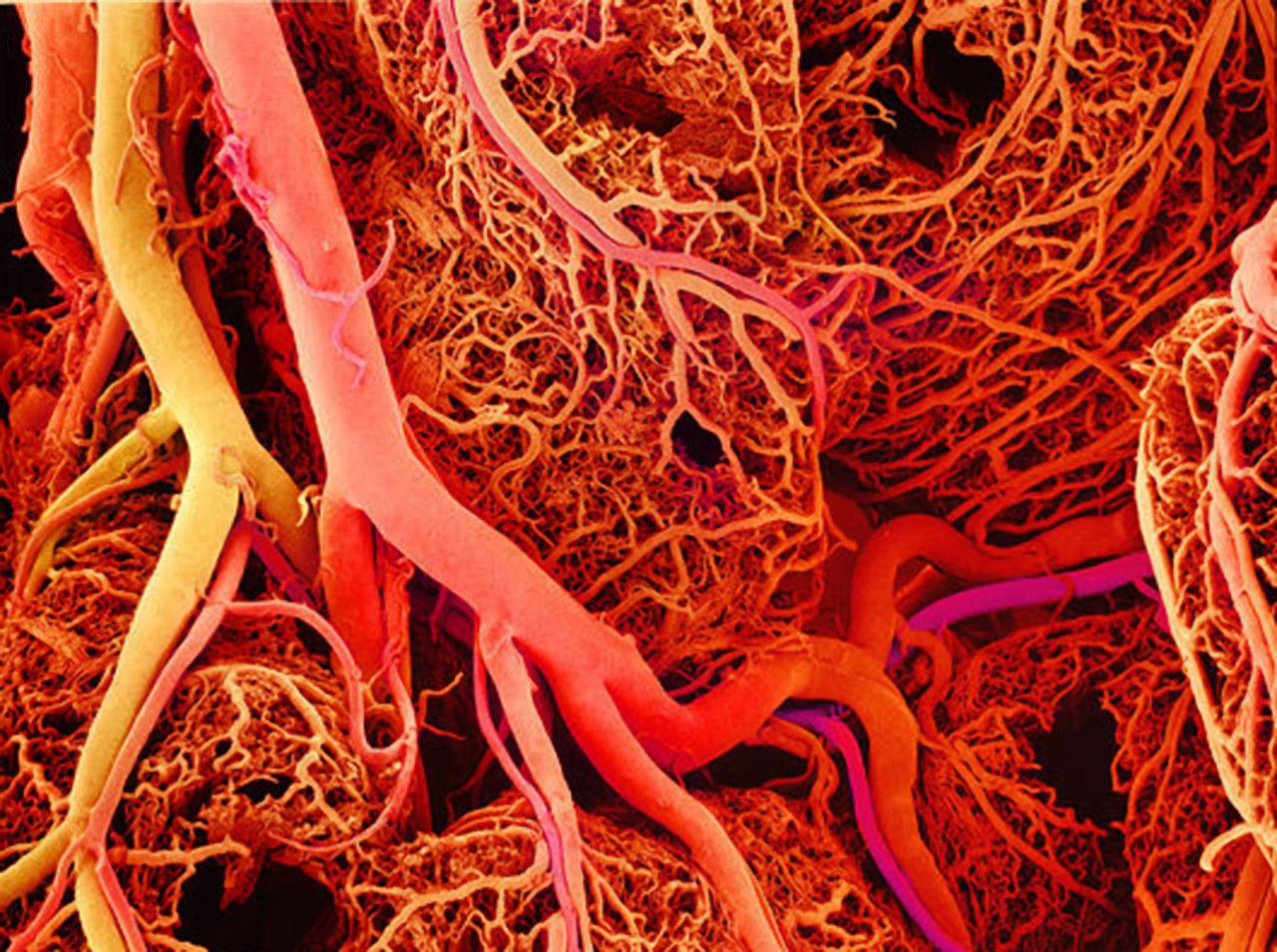
The circulatory system also called cardiovascular system or the vascular system is an organ system that permits blood to circulate and transport nutrients such as oxygen, carbon dioxide, hormones, and blood cells.
Information:
  • The HEART  is an organ that atacs like a pump. It has four chambers. The two upper chambers are called the atria and the two lower chambers are called ventricles. They're surrounded by thick walls of muscle that contract to pump the blood into and out of the heart. When blood enters the heart, it's then pumped to the lungs. In the lungs, the red blood cells absorb oxygen. That oxygenated blood is pumped back into the heart. The heart then pumps the oxygenated blood around the body.
  • The BLOOD VESSELS are tubes that connect the heart to the rest of the body. There are three types of blood vessels: arteries, veins, and capillaries. Arteries are wide tubes that carry a lot of blood. They carry oxygenated blood away from the heart. Veins are narrow tubes that carry small quantities of blood. They carry blood which contains carbon dioxide back to the heart. Capillaries connect the arteries and the veins.
  • Then the blood containing carbon dioxide travels back through the blood vessels to the heart. It's pumped  into the lungs again so that the red blood cells can absorb more oxygen.

PARTS:
The parts of the circulatory system are this:
  • Hearth                            
         
  • Red bloods cell

            
  • Blood vessels 


Illenses:
Some of the illenses are this:
  1. Hemorrhage
  2. Thalassemia
  3. AnemiaIllenses
MAIN FUCTIONS:
The cardiovascular system consists of the heart, blood vessels and blood.This system has three main fuctions: Transport of nutrients, oxygen, and hormones, to cells throughout the body and removal of metabolic wastes.

RELATION SHIP:
The circulatory system is made up of blood vessels that carry blood away from and towars the heart. Arteries carry blood away from the heart and veins carry blood back to the heart. The circulatory system carries oxygen, nutrients, and hormones to cells, and removes waste products, like carbon dioxide. 

RESPIRATORY SYSTEM


  DEFINITION :The respiratory system is the group of tissues and organs in your body that allow you to breathe. This system includes your airways, your lungs, and the blood vessels and muscles.


MAIN FUNCTION:Respiratory system have to breathe air take the oxygen and expel  the carbon dioxide. This is to supply oxygen to all the parts of your body....breath in: to take the air /breath out : to expel the carbon dioxide


PARTS: nose , mouth , throat (pharynx) , voice (larynx) , windpipe (trachea) , airways (bronchi) , lungs


Resultado de imagen de respiratory system


ILLNESSES:
Asthma : this illness cause:
  • Shortness of breath
  • Chest tightness or pain
  • Trouble sleeping caused by shortness of breath, coughing or wheezing
  • A whistling or wheezing sound when exhaling (wheezing is a common sign of asthma in children)
  • Coughing or wheezing attacks that are worsened by a respiratory virus, such as a cold or the flu

Lung Cancer: this illness is more common to the people that smoke, this illness cause:
  • A new cough that doesn't go away
  • Coughing up blood, even a small amount
  • Shortness of breath
  • Chest pain
  • Hoarseness
  • Losing weight without trying
  • Bone pain
  • Headache
RELATIONSHIP WITH OTHER SYSTEMS:  This system has relationship with circulatory system  because the oxygen go to all the body trough the blood. Also have relationship with digestive system because the mouth is one part of digestive system.

CURIOSITIES:
  1. Hairs in the nose help clean and warm the air we breathe.
  2. Women and children breathe at a faster rate than men
  3. Your left lung is smaller than your right (which leaves room for your heart!)
  4. We lose about 12 oz of water of water a day through breathing. In addition to exhaling carbon dioxide, you also exhale water

viernes, 14 de diciembre de 2018

Respiratory System

RESPIRATORSYSTEM

  • Main function:
  • The respiratory system is responsible to taking the oxygen and expelling the carbon dioxide.
  • What happens when we breathe:
In addition to digestion, respiration or breathing is also part of nutrition. Our bodies need to absorb oxygen in order for our muscles to function. Our respiratory system takes oxygen from the air we breathe.  

  • Parts:

The parts of the respiratory system are:

1.Mouth and Nose: Air enters the body through the mouth and nose.

2.Lungs: This to large bags are connected to the bronchi.The bronchi branch into millions of smaller tubes, or bronchioles, here in te lungs.

3.Bronchi: These two smaller tubes connect the trachea to the lungs.

4.Bronchioles: These small tubes inside the lungs. At the end of each bronchiole, there are tiny sacs called alveoli. The air we breathe in goes into these tiny sacs and then passes into the blood vessels which surround them.

5.Trachea: This longs, rigid tube connects our mouth and nose to our two bronchi.

6.Vocal cords: As air passes our vocal cords, they vibrate and enable us to speak.


  • Relationship with other system: 

The respiratory system and the circulatory system have a relationship to circulate blood and oxygen throughout the body. Air conditioning and sale of lungs through the trachea, bronchi and bronchioles. Blood enters and sells the lungs through the pulmonary arteries and the pathways that connect with the heart.

  • Illnesses: 
Acute bronchitis is an inflammation of the large bronchi in the lungs that usually caused by viruses or bacteria and that can last for several  days or weeks. The characteristic are cough, phlegm, shortness of breath and whistling when breathing as a result of obstruction of the inflamed airways. The diagnosis is made through a clinical examination and, sometimes, microbiological analysis of phlegm.  

Acute-bronchitis.jpg


  • Curious fact:
They air we breathe out is made up of waste gases, such as carbon dioxide. This air also contains water vapour. We breathe out about half a litre of water vapour every day.

mi茅rcoles, 12 de diciembre de 2018

Urinary System


The urinary system is the group of organs that participate in the formation and exist of urine.

The urinary systems consists: two ureters, the bladder, two sphincter muscles and the urethra.


THE TOUR IS THE FOLLOWING:

1) The Kidneys: Two bean-shaped organs that filter the remains of the blood and
 produce urine.


2)The Ureters: Two thin tubes that pass urine from the kidneys to the bladder.


3) The bladder: A bag that keeps urine until it is time to go to the bathroom.


   4)The urethra: A duct that carries urine from the bladder to the outside of the body when we urinate.


THE MOST IMPORTANT THING ARE THE  KIDNEYS


They do two important jobs: they filter the waste from the blood and produce the urine to eliminate it.


If it did not work it would be a problem. You need to have at least one kidney functioning to be healthy.


In the urine you find:


water

urea

urocromo
  
sales

creatinina

bilis hepatic
  
ammonia


GO TO THE BATHROOM

Once it is produced, the urine passes from the kidneys to the bladder, where it is stored until you need to go to the bathroom. The bladder expands as it fills; When it is full, the nerve located in the wall of the bladder sends a message to the brain to indicate that you need to go to the bathroom.


A PEDIATRIC UROLOGIST

focuses on the urinary system in children.


martes, 11 de diciembre de 2018

CIRCULATORY SYSTEM

MAIN FUNCTIONS

The circulatory system, also called the cardiovascular system or the vascular system, is an organ system that permits blood to circulate and transport nutrients, oxygen, carbon dioxide, hormones, and blood cells to and from the cells in the body. The circulatory system includes the lymphatic system, which circulates lymph. The passage of lymph for example takes much longer than that of blood. Blood is a fluid consisting of plasma, red blood cells.


RELATIOSHIP WITH OTHER SYSTEMS

  • Digestive System: The digestive system breaks down foods and takes out needed nutrients. These nutrients are put into the blood stream for the cells to use as energy. Minerals and vitamins are also put into the blood stream to strengthen bones and the immune system. 
  • Respiratory System: The respiratory system is how oxygen is brought into the body. It enters through the lungs into the alveoli. From there it is sent through blood vessels into the blood stream for the body to use. At the same time, carbon dioxide is brought to the lungs through the blood to be exhaled.


ORGANS 

Heart The human heart is one of the most fascinating and crucial organs in the human body. It pumps oxygen-filled blood to every living cell in the body. Blood Vessels Though blood vessels are not organs, their presence is essential for every organ system of the body. Through an endless network comprising hundreds of thousands of blood vessels, blood is made accessible to every part of the body.


ILLNESSES CAN AFFECT TO MY SYSTEM 

  1. Heart attacks: .pain in the center or left side of the chest that feels like mild or severe discomfort, pressure, fullness, or squeezing .pain that radiates from the jaw, shoulder, arm, or across the back, shortness of breath, sweating, nausea, irregular heartbeat, unconsciousness.
  2. Strokes: Strokes often occur when a blood clot blocks an artery in the brain and reduces the blood supply. They also can happen when a blood vessel in the brain breaks open. Both events keep blood and oxygen from reaching the brain. As a result, parts of the brain are likely to be damaged.
  3. High blood pressure: Blood pressure is the measurement of how much force is used to pump blood through your arteries. If you have high blood pressure, also called hypertension, it means the force is higher than it should be. High blood pressure can damage your heart and lead to heart disease, stroke, or kidney disease. There are no symptoms with high blood pressure, which is why it’s often called “the silent killer.” For more information, read about hypertension.

domingo, 9 de diciembre de 2018

Circulatory System


-         The circulatory system is made up of blood vessels that carry blood away from and towards the heart.

The circulatory system carries oxygen, nutrients, and hormones to cells, and removes waste products, like carbon dioxide.


What Are the Parts of the Circulatory System?

o   The pulmonary circulation is a short loop from the heart to the lungs and back again.
The pulmonary artery is a big artery that comes from the heart. It splits into two main branches, and brings blood from the heart to the lungs. At the lungs, the blood picks up oxygen and drops off carbon dioxide. The blood then returns to the heart through the pulmonary veins.

o   The systemic circulation carries blood from the heart to all the other parts of the body and back again.
Next, blood that returns to the heart has picked up lots of oxygen from the lungs.
Once the blood is back in the heart, it needs to re-enter the pulmonary circulation and go back to the lungs to drop off the carbon dioxide and pick up more oxygen.


What Are the Parts of the Heart?

The heart has four chambers — two on top and two on bottom:

o   The two bottom chambers are the right ventricle and the left ventricle. These pump blood out of the heart.

o   The two top chambers are the right atrium and the left atrium. They receive the blood entering the heart.


The parts of Circulatory System are:

o   Arteries

o   Veins

o   Capillaries


Circulatory System Working With Other Systems:

o   Nervous System:  The nervous system is made up of the brain, spinal cord and nerves.  The brain sends messages to the heart telling it to beat.

o   Digestive System: The digestive system breaks down foods and takes out needed nutrients.  These nutrients are put into the blood stream for the cells to use as energy.

o   Muscular System: The heart is a muscle.  The expanding and contracting of this muscle is what pumps blood throughout the body.

o   Respiratory System:  The respiratory system is how oxygen is brought into the body.  It enters through the lungs into the alveoli.  From there it is sent through blood vessels into the blood stream for the body to use.

o   Endocrine System:  The endocrine system is where hormones are produces.  Hormones and other chemicals produced by these glands use the circulatory system to travel to needed parts of the body.


Illnesses that can affect the circulatory system:

o   Heart Disease.
Cardiovascular disease is a group of problems that occur when the heart and blood vessels aren't working the way they should.

o   Strokes.
Strokes often occur when a blood clot blocks an artery in the brain and reduces the blood supply. They also can happen when a blood vessel in the brain breaks open. Both events keep blood and oxygen from reaching the brain. As a result, parts of the brain are likely to be damaged.

o   Heart failure
Heart failure occurs when the heart muscle is weakened or damaged.


THANKS FOR YOUR ATTENTION AND I WAIT FOR YOUR COMMENTS.


jueves, 6 de diciembre de 2018

DIGESTIVE SYSTEM

MAIN FUNCTIONS

The digestive system has three main functions

  • Digestion: break down of foods in to simpler forms which can be absorbed by the body cells 
  • Absortion: nutrients form digested food absorbed in to the blood stream 
  • Elimination: forming, storing and elimination of solid wastes 
PARTS

The main parts are:
  • Mouth: mastication or chewing is the first step digestion. Chewing increases the surface area of foods to allow more efficent break down .
  • Esophagus: connect the mouth to the stomach 
  • Stomach: the acids in the stomach break down the long chains of food (as proteins)
  • Liver the liver is an organ that remove the toxic subtances from the body. 
  • Small intestine: It is where most of the absorption of food takes place.
  • Large intestine : It is where the water is absorbed and the feces are before being removed.
  • Anus: Its function is to contro the feces removal
RELATIONSHIP WITH OTHER SYSTEMS 
  • Circulatory system : Provides the nutrients to the blood used in the body processes.
  • Excretory system: The excretory system helps the digestive to getting rid of waste subtances.
ILLNESSES THAT CAN AFFECT TO THE DIGESTIVE SYSTEM
  • Gastritis: It is caused by bacterial infection. Gastritis can cause vomiting, diarrhea and abdominal pain.
  • Reflux: It is the abnormal flux of the stomach contents (including acids) to the esophagus
I HOPE YOU LIKE IT 馃槂