viernes, 6 de mayo de 2016

5 WAYS TO SAVE ENERGY

You can do to save energy
This is a five examples.


  1. Turn off the light when you leave a room.
  2. Use sunlight for the day.
  3. Use the washing machine so you save water and electricity.
  4. If you use an electric stove gas stove.
  5. Do not put to charge mobile,tables... Many times a day and will save.

miércoles, 4 de mayo de 2016

electricity

5 ways of saving the energy:


1.we dont leave the ligth turned on:


2.we dont leave the tv turned on:


3. we used the dishwash when only is filled:


4.we can used the washing machine when only is filled:


5.we can save the energy in the computer:


caritas-felices-3.jpg


thank you


lunes, 2 de mayo de 2016

Energy Electricity 3

Energy Electricity


Conserving electricity serves  helping stop global warming and saving a lot of money .  Any appliance that operates on electricity can be made more energy efficient.   5 examples

Lighting :Using natural light whenever possible instead of relying on artificial light can greatly reduce  of electricity you use during the day

Appliances :.

that you turn off all elctronicos phone , when you 're not using because it spends energy

Heating and cooling :

It keeps your house cool in summer and warm in the summer

Energy Source :
Resultado de imagen de DIBUJOS DE ENERGIA RENOVABLE
Look into getting your energy from a company that uses renewable energy, such as wind or solar energy.

Water example:
You must be short showers instead of long baths .then you would be saving a lot of water

more informations: Why is it important to save energy? If people use less energy, there is less pressure to increase the available supply of energy, for example by constructing new power plants, or by importing energy from a different country
Fun Facts.
  • Electricity travels at the speed of light - more than 186,000 miles per second!
  • A spark of static electricity can measure up to three thousand (3,000) volts.
  • A bolt of lightning can measure up to three million (3,000,000) volts, and it lasts less than one second!
  • Electricity always tries to find the easiest path to the ground.
  • Electricity can be made from wind, water, the sun and even animal poop.

sábado, 30 de abril de 2016

Electricity

ELECTRICITY
*What can I do to save the electricity?

Use only when it´s necessary or obligatory, and try not to spend it in bad ways.
   
                 
* Examples:

   ·When I´m in other place, I switch off the light.


   ·When I´m doing my homework if it a sunny day, I take   advantage of the sun and not of the artificial light.

   ·I´m can´t stay with the computer when it is carry.


   ·I wait for the battery will finish.


   ·Buy machines and electrical appliance energy-saving.


*Fun facts:

In my house we have photovoltaic panels that take the sun´s energy to transform in electric energy. That energy we can use for us at home or sell at the electric company. In this moments the actual politic doesn´t help to use that energy for us, so we sell the electric energy to the company.


viernes, 29 de abril de 2016

5 examples to not waste electricity

1. Switch off the lights when you don´t need it.


2. Switch off the television when you are not watching it.


3. Use the dishwasher only when is full of dirty dishes.


4. Switch off the fridge when you are traveling.


5. Use the washing machine only when is full of dirty clothes.


domingo, 6 de marzo de 2016

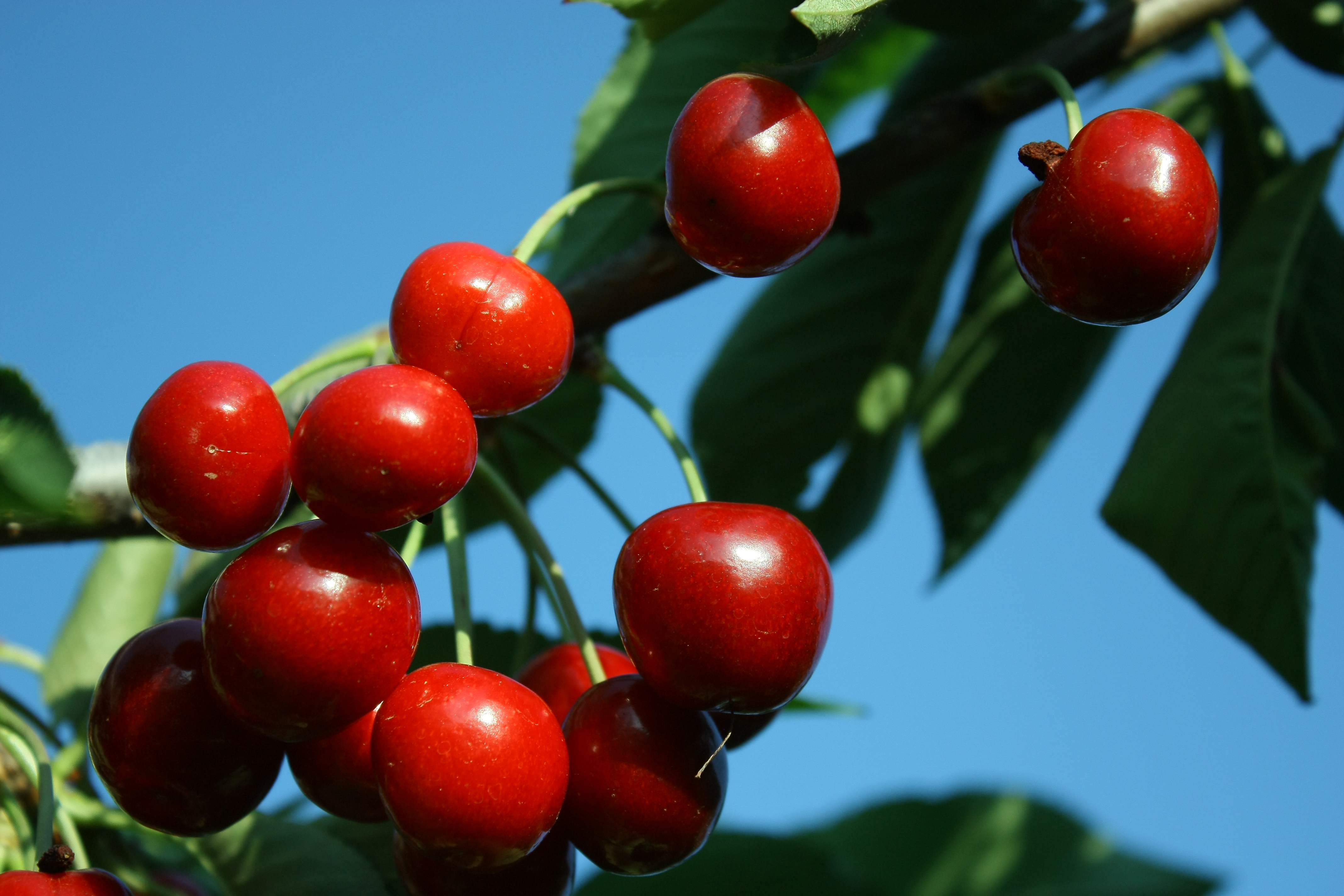
CHERRY TREE


  • Kingdom: Plantae
  • Division: Magnoliophyta
  • Class: Magnoliopsida
  • Subclass: Rosidae
  • Order: Rosales
  • Family: Rosaceae
  • Subfamily: Amygdaloideae
  • Tribe: Amygdaleae
  • Genre: Prunus
  • Subgenus: Cerasus
  • Section: Cerasus
  • Species: P. avium

  • CHARACTERISTICS:
    • The cherry trees are living in warm temperate zones of the northern hemisphere.
    • The two best known species in Europe and western Asia are the sweet cherry or wild cherry (prunus avium) and cherry acid or sour cherry (prunus cerasus).
    • They are a lot of wild cherry trees that are exploited to make jams, cakes and drinks.


    PARTS OF CHERRY TREE:
    • Root:  Cherry tree's root system serves two critical functions. First, it pulls water and nutrients from the soil and directs them upward so that they can feed the trunk, stems, leaves, flowers and fruit of the tree. Second, it holds tight to the ground and supports the rest of the tree, allowing the tree's structure to perform its own functions.
    • Trunk: The trunk can reach 25 m tall, with smooth bark, ringed, reddish brown with transverse bands. It is used in cabinetmaking and to make musical instruments.
    • Leaves: Its length is 7,5 - 12,5 cm and 3,5 - 5 cm with a margin irregularly serrated. 
    • Flowers: White or pink, 2-3 cm in diameter that apperar before or while leaves. They have 5 sepals, 5 while petals, numerous stamens and pistils; 2-6 are grouped petals, sorrounded at the base by a crown.
    • Fruits: Cherries bouquets.
    • Pollination: The cherry trees are pollinated by bees. 

    GROW AND REPRODUCTION:
    They are hermaphroditic (both sexes in every flower). They contain (or none) seed within a bone. It is reproduced burying its seeds in autumn. They will be born in the first or second spring. If you scrape bones rubbing against hard and rough surface (sand, lime, stone ...) facilitate the entry of moisture and germinate before and better.

    Cultivation from seed is a long process and requires a lot of care. The seed should be soaked with water at least 24 hours before it is planted, and this first planting should be in a small space under a thin layer of soil that is to be monitored closely until it germinates. For beginners it is preferable to get a cutting or a small tree. This will give you best guarantee of success. It should be planted in winter and it is desirable to add organic fertilizer to the soil. Preferably requires a chalky, fresh and deep soil, but adapts to all soils very well as long as the water runs.

    Cherry is able to be pollinated with pollen from its own variety. The best pollinators are bees. Flowering is the period spanning from the opening of the first flower until the fall of the last petals and cherry requires at least 50% of flowers properly pollinated to give a cherry harvest conditions, so this is very important.
     

    THE CHERRY FRUIT:
    • The cherry belongs to the group of stone fruit. 
    • It has dark red or almost black smooth skin. Fleshy meat is moist and usually red.
    • Cherry is rich source of vitamins C. Sour cherry also contains vitamin A. 
    • Cherries have low caloric value. 100 g of cherries have only 63 calories.
    • Cherries can be consumed raw, or as part of various sweet and salty dishes.
    • Cherries are popular and often used in the industries of jams, jellies, ice-creams, marmalades, sauces and juices.
    • Scientific experiments showed that cherries have potential to reduce inflammation and sensation of pain in rats.
    • Around two million tons of cherries are produced each year. Turkey is the greatest manufacturer of cherries in the world, followed by the United States, China, Spain, Chile, Japan and Australia. In Spain they are produced in Valle del Jerte (Extremadura)
    • Fruit production starts 3 to 4 years after planting. Tree reaches maturity after seven years.
    • One tree produces around 7000 cherries per year.
    • Cherry tree can survive and produce fruit around 100 years.

    FUN FACTS:
    • I chose  this beautiful tree because in the garden of my grandmother's village, in La Vera, very close to Valle del Jerte (Extremadura) grow too easily and it is my favorite fruit.
    • It originated in Asia and brought to Rome Lucullus, a roman general, and Romans spread their culture throughout the Mediterranean sea.
    • In Roman mythology he is related to Venus and it was considered a symbol of innocence. It has also been linked to the dark and magical, wizards and warlocks of the Middle Ages used a cherry branch to perform their spells. 
    • In Japan the cherry tree is named Sakura.
    • The tails of cherries are very good to help in the treatment of rheumatic diseases and the skin and the flowers for the circulatory system.
    • But cherries tree, like the rest of trees prunus genus contains in its seeds, flowers and leaves hydrocyanic acid (cyanide) a powerful poison. Poisonings have been detected in animals, especially pigs, and causes them choking, vomiting, dizziness, increased heart rate, respiratory arrest and death.
    • The story of George Washington cutting down the cherry tree is very famous in the United States. It was first published in 1806. 
    When George Washington was a child lived on a farm in Virginia and his father had planted fruit trees with a nice cherry tree. Someone gave him a new ax and  he felled the tree. When his father saw the tree cut angrily asked:
    - Do you know who killed my cherry ?.
    And little George can not lie and confessed. His father looked at him and said:
    - I'm glad you had the courage to tell the truth. I prefer to be honest and brave to have a whole garden with the best trees. Never forget, my son.


      martes, 1 de marzo de 2016

      CARNIVOROUS PLANT

      Venus Flytrap


      -Characteristics:
       
        Kingdom:Plantae

       Family:Droseracerae 
       Genus:Dionaea 


      Venus flytrap is known botanically as Dionaea muscipula. The plant, which grows in poor soil in boggy parts of coastal North Carolina and South Carolina of EEUU, is best known for its carnivorous nature: It relies on captured insects for sustenance.
       
      -Parts:

      • Leaves: Venus flytrap has a rosette of leaves up to 20 cm across. Each leaf has a flat stalk and ends in a trap about 2 cm across. The centre is often reddish, and the sides of the trap are lined with 14–20 stiff, comb-like bristles that interlock when the trap closes.
      • Flowers: The flowers are white, in a cluster at the top of a 15–45 cm leafless stalk. The flowers have five sepals and five equal petals, around 12 mm long. There are 15–20 stamens.
      • Fruits and seeds: Numerous, small black seeds are formed in a round capsule.
       

      -Reproduction:
       
      The basic idea of pollinating a flower is that the pollen from the anthers that are on the top of the filaments (stamen) must come in contact with a receptive pistil. The pistil is the greenish round thing in the center of the flower. At the top of the pistil is the stigma.
       
      The Venus flytrap is a perennal plant, which produces flowers from mid-May to the beginning of June; the method of pollination is not yet understood and whilst cross-pollination seems likely, self-pollination may also be possible .It is thought that seeds are dispersed in water, or by birds that accidentally pick up seeds in the muddy hábitat .

                                          Venus Fly Trap Flower
      -Fun facts:
      • Like all plants, the Venus flytrap gets its energy from the sun in a process called photosynthesis. It digests insects and arachnids to get nutrients .
      • Venus Flytrap plants are native to North America.
      • The only place in the world that you can see native Venus Flytrap plants grow are on the coast of North and South Carolina, in the United States of America.
      • It’s been estimated to live up to 20 years, possibly longer.
      • It takes approximately 10 days for the Venus Flytrap to completely digest an insect, and reopen its trap.
      • Venus flytrap has been the source of inspiration for many a horror film involving man-eating plants